
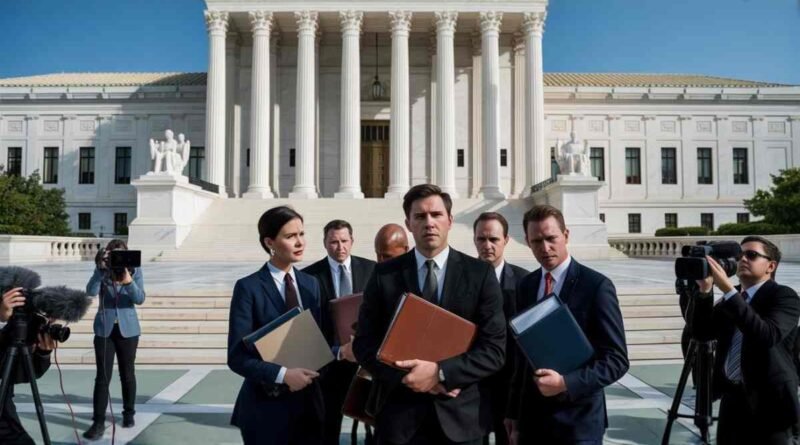
Trump’s Lawyers Await Supreme Court Ruling That Could Reshape Judicial Power
The US Supreme Court is preparing to release some of its most important decisions of the term. One of them could directly affect how much power judges have to block a president’s actions nationwide.
Trump’s legal team is watching closely. The outcome could change how easily courts can stop his policies before they ever take effect.
This ruling matters far beyond a single case. It could reshape the balance of power between presidents and the judiciary for years to come.
What Supreme Court Decision Is Trump’s Legal Team Waiting For?
The court is expected to rule on cases tied to nationwide injunctions. These are court orders that allow a single federal judge to block a government policy across the entire country.
The decision is expected in late June, which is when the Supreme Court traditionally releases its most consequential opinions.
Late June matters because it signals finality. Once the ruling is issued, it immediately affects ongoing cases involving Trump’s executive actions, including immigration, federal staffing, and enforcement priorities.
For Trump’s lawyers, this ruling could either remove a major legal roadblock or reinforce it.
What Is Judicial Power: In Simple Terms
Judicial power is the authority courts have to interpret the law and stop actions they believe violate the Constitution or federal law.
Lower courts, such as district courts, hear cases first. These judges can issue orders to pause or block government actions while lawsuits move forward.
Right now, judges can block policies nationwide, even if the case only involves a few states or individuals. That broad reach is what’s under review.
Supporters say this power prevents harm. Critics argue it gives too much control to individual judges.
Why Nationwide Injunctions Are at the Center of the Case
Nationwide injunctions stop a policy everywhere, not just for the people who sued.
Trump opposes them because they can freeze his agenda instantly. A single ruling can halt an executive order before it ever takes effect.
Courts use these injunctions when they believe a policy may be unconstitutional or cause widespread harm if allowed to continue.
During Trump’s presidency, nationwide injunctions blocked policies on immigration, federal funding, deportations, and workforce changes. That history is why this issue is now front and center.
How This Decision Could Expand or Limit Trump’s Authority
If the court sides with Trump, lower courts may lose the ability to issue broad injunctions. Policies could move forward while lawsuits continue.
That would give the president more room to act quickly and enforce executive orders without immediate nationwide blocks.
If the court limits executive power, judges would retain the authority to stop policies across the country. That would keep a strong judicial check on presidential action.
Either way, the decision will directly shape how executive orders are enforced in practice.
Why Trump Is Facing So Many Legal Blocks
Trump has issued a record number of executive actions in a short time. That naturally leads to legal challenges.
Courts respond quickly when lawsuits claim constitutional violations or overreach. In many cases, judges act fast to prevent irreversible outcomes.
Compared to past presidents, Trump has faced more nationwide injunctions. This has turned judicial power into a central political and legal issue, rather than a background process.
Supreme Court Signals So Far
During oral arguments, several justices questioned how far judicial authority should go.
Some raised concerns about presidents acting without checks. Others questioned whether a single judge should have power over national policy.
Legal experts are watching for signs about whether the court prefers narrower rulings or sweeping changes. The tone suggests the justices are weighing both legal limits and real-world consequences.
Other Major Trump Cases Before the Supreme Court
Gender-Affirming Care
The court is reviewing cases related to state bans on gender-affirming care for minors. These cases involve federal authority, state power, and judicial review.
Federal Agency Layoffs
Another case challenges Trump’s plan to reduce the size of federal agencies. Judges have blocked parts of the plan, raising questions about executive authority.
Deportation Authority
The court is also reviewing Trump’s use of older laws to speed up deportations. These cases test how much discretion a president has in enforcement.
All of these cases connect back to the same issue: how far judicial power can reach when reviewing presidential decisions.
What Happens After the Ruling
Immediately, lower courts will adjust how they handle injunctions. Some ongoing cases could change direction overnight.
In the long term, the ruling could redefine how future presidents govern. It may also influence how quickly courts intervene in executive actions.
Future administrations, regardless of party, will feel the effects of this decision.
Why This Ruling Could Redefine Presidential Power
At stake is more than one president’s agenda. The Supreme Court is deciding how power is shared between judges and the White House.
If judicial power is narrowed, presidents gain more freedom to act. If it’s reinforced, courts remain a strong check on executive authority.
For readers, this ruling matters because it shapes how laws are enforced, how quickly policies change, and how much influence courts have over national decisions.
FAQs
Does this Supreme Court ruling affect only Trump, or future presidents too?
No, it goes beyond Trump. The decision would shape how much freedom future presidents have and how courts can respond to their actions.
Could lower courts still block policies, just in a more limited way?
Yes. Judges could still block policies for specific states or groups, even if nationwide injunctions are restricted.
How quickly would this ruling change ongoing lawsuits?
Likely very quickly. Courts usually adjust their approach as soon as a Supreme Court decision is released.
Is there a chance the Supreme Court avoids making a broad ruling?
Yes. The court sometimes keeps decisions narrow to resolve a case without fully redefining judicial authority.
Why didn’t earlier Supreme Courts address nationwide injunctions clearly?
Because they were rarely used in the past. Their recent rise is what’s forcing the court to address them now.
Could Congress step in if the ruling causes controversy?
Yes. Congress could pass laws to clarify how injunctions work, though political gridlock often slows that process.