
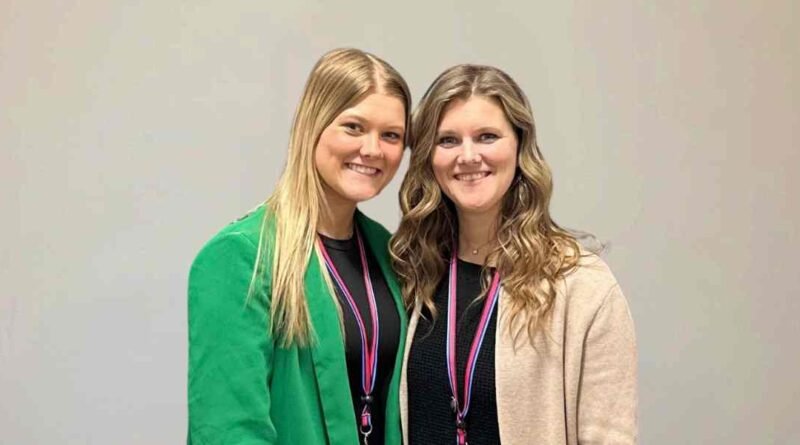
Taylor Ommen Soil Research: Young Scientist in Agriculture
The story of Taylor Ommen Soil research shows how curiosity, hard work, and hands-on learning can lead to meaningful scientific discoveries. Taylor Ommen is a young researcher from Stuart, Iowa, who gained attention for her experiments on soil decomposition and sustainable agriculture. While still in school, she explored how natural soil additives can improve soil health and help crops grow more efficiently.
Her work stands out because it connects scientific research with real agricultural challenges. Farmers constantly look for ways to improve soil fertility while reducing chemical inputs. Taylor’s research explores exactly that: how organic materials and natural processes can improve soil quality.
Even more impressive is that this work began during her early school years. Through science fairs, STEM programs, and agricultural experimentation, Taylor developed research that attracted statewide and national recognition. Her journey shows how young scientists can contribute to real-world environmental solutions.
Today, her research continues to inspire students, educators, and agricultural communities interested in sustainable farming practices and environmental science.
Quick Facts About Taylor Ommen and Her Soil Research
Below is a quick overview of key information related to Taylor Ommen and her soil science work.
| Category | Details |
|---|---|
| Full Name | Taylor Ommen |
| Hometown | Stuart, Iowa, United States |
| Field of Research | Soil Science and Environmental Studies |
| Known For | Soil decomposition research using organic additives |
| Education | West Central Valley High School graduate, Grand View University student |
| Major Project | Increasing Soil Decomposition Rates with Natural Additives |
| STEM Programs | Iowa 4-H Youth Development |
| Major Award | National STEM Champion (2024) |
| Science Fair Recognition | State Science and Technology Fair of Iowa |
| Career Focus | Sustainable agriculture and soil ecology |
This table highlights how her work combines agriculture, environmental science, and youth-driven research.
Who Is Taylor Ommen?
Taylor Ommen is an emerging young scientist with a strong interest in agriculture and environmental science. She grew up in Stuart, Iowa, a rural community surrounded by farmland. Living in an agricultural environment shaped her early understanding of how soil, crops, and weather interact.
Her childhood was closely connected to farming. Spending time on her family’s farm exposed her to the everyday realities of agriculture. She observed how soil quality affects plant growth and crop productivity. These early experiences sparked questions that eventually led to scientific experimentation.
Many scientists discover their passion later in life, but Taylor’s curiosity started early. She was interested in understanding how soil works and why certain crops grow better in some areas than others. Rather than simply observing, she began testing ideas through small experiments.
Teachers and local STEM programs helped nurture this curiosity. School science projects gave her the opportunity to turn observations into structured experiments. Over time, these small experiments evolved into more serious research projects focused on soil decomposition and soil health.
Her story is not just about scientific success. It also reflects how rural life, education, and curiosity can combine to inspire meaningful research.
How Taylor Ommen Became Interested in Soil Science
Taylor’s interest in soil science developed gradually through everyday experiences on the farm.
Early Exposure to Farming
Growing up in an agricultural environment meant that soil was always part of daily life. Farmers constantly talk about soil conditions, nutrients, and crop performance. Hearing these discussions sparked Taylor’s curiosity.
She noticed that some areas of farmland produced stronger crops while others struggled. This raised an important question: what makes soil healthy?
Curiosity About Soil Conditions
As Taylor learned more about agriculture in school, she realized that soil health depends on many factors. These include organic matter, microorganisms, nutrients, and moisture levels.
She became interested in how organic materials break down in soil and how this process supports plant growth.
School Experiments
During middle school and high school, Taylor began conducting experiments related to soil decomposition. She wanted to see how natural materials could influence soil fertility.
Instead of relying on chemical fertilizers, she explored whether organic additives could improve the soil naturally.
Agriculture Shaping Research Direction
Her agricultural background played a major role in shaping her research. Farmers care deeply about soil health because it determines crop productivity. By focusing on soil decomposition, Taylor chose a topic that directly connects science with farming practices.
This combination of curiosity and practical experience eventually led to her well-known soil research project.
Understanding Taylor Ommen’s Soil Research Project
The central focus of Taylor Ommen Soil research is the process of soil decomposition and how it affects agricultural productivity.
Her project examined how natural materials added to soil could speed up the breakdown of organic matter. This process releases nutrients that plants need to grow.
The goal of the research was simple but powerful:
Find ways to improve soil health using natural methods.
This research fits within the larger field of sustainable agriculture, which aims to reduce reliance on chemical fertilizers and promote healthier ecosystems.
What Is Soil Decomposition?
Soil decomposition is the process where organic materials break down into smaller components within the soil.
These materials may include:
- Plant leaves
- Crop residue
- Roots
- Compost
- Animal waste
Tiny organisms in the soil, such as bacteria and fungi, play a key role in this process. They break down organic matter into nutrients that plants can absorb.
This cycle is essential for maintaining fertile soil. Without decomposition, nutrients would remain locked inside organic materials instead of becoming available for plant growth.
Healthy soils contain a large community of microorganisms that continuously recycle nutrients through decomposition.
Why Soil Decomposition Matters for Farming
For farmers, soil decomposition is one of the most important natural processes in agriculture.
When organic matter breaks down effectively, several benefits occur.
Nutrient Release
Decomposition releases important nutrients such as nitrogen, phosphorus, and potassium. These nutrients are necessary for strong plant growth.
Improved Soil Structure
Organic matter helps soil hold moisture and maintain a stable structure. This makes it easier for plant roots to grow.
Better Crop Health
Healthy soils lead to healthier crops. Plants growing in nutrient-rich soil often produce higher yields and stronger roots.
Taylor Ommen’s research explored how natural additives could improve this decomposition process.
The Experiment Behind Taylor Ommen Soil Research
The research project involved a structured scientific experiment designed to measure how different soil additives affect decomposition rates.
Soil Sample Testing
Taylor collected multiple soil samples and placed them in controlled environments. Each sample represented a different test condition.
By keeping most conditions consistent, she could measure how each additive affected soil behavior.
Controlled Conditions
To ensure accurate results, variables such as moisture, temperature, and soil type were monitored carefully. This allowed the experiment to isolate the effects of the additives themselves.
Comparing Natural Additives
The core of the experiment involved comparing different organic materials added to soil samples.
Possible additives included:
- Compost
- Plant-based organic matter
- Natural nutrients
- Agricultural byproducts
Each soil sample was observed over time to measure decomposition rates and changes in soil composition.
By documenting the results carefully, Taylor created a data-driven analysis of how natural materials influence soil health.
Key Discoveries From the Research
Taylor’s experiments provided several useful insights about soil health and decomposition.
Important findings included:
- Organic additives can increase microbial activity in soil.
- Higher microbial activity often leads to faster decomposition of organic matter.
- Natural soil amendments may improve nutrient availability for crops.
- Soil enriched with organic material tends to retain moisture better.
- Sustainable soil practices can reduce reliance on chemical fertilizers.
While her research was conducted on a smaller experimental scale, the results highlight how natural processes can strengthen soil ecosystems.
These findings also align with broader agricultural research showing that organic soil management supports long-term sustainability.
Science Fairs and National Recognition
Taylor’s research gained attention through science fairs and STEM competitions.
Science fairs provide students with opportunities to present their research to judges, scientists, and educators. These events evaluate projects based on originality, scientific method, and real-world impact.
Taylor’s soil research performed well in several competitions because it addressed an important agricultural issue.
Her project eventually reached the State Science and Technology Fair of Iowa, one of the most competitive student research events in the region.
Presenting her research at these events required more than just scientific knowledge. She also needed to communicate complex ideas clearly and defend her findings in front of judges.
Her ability to explain soil science in a clear and practical way helped her stand out among many talented students.
Major Awards and Achievements
Taylor’s dedication to research earned her several notable awards.
| Year | Achievement |
|---|---|
| 2024 | National STEM Champion |
| 2024 | National STEM Challenge Finalist |
| 2024 | Iowa State Science Fair Recognition |
| 2025 | STEM in Motion International Program |
These achievements highlight how student research can gain national recognition when it addresses real scientific challenges.
Winning awards also helped open doors for further academic opportunities and mentorship.
Leadership in STEM and Youth Science Programs
Beyond her own research, Taylor has also been active in youth STEM programs.
One of the most important organizations she participated in is Iowa 4-H Youth Development. This program encourages students to explore science, agriculture, and leadership through hands-on learning.
Through 4-H programs, Taylor participated in workshops and educational events that focused on innovation and problem solving.
She also helped share knowledge with other students interested in science projects. Mentoring younger participants allowed her to pass on research skills and encourage curiosity.
This leadership role is important because STEM education depends on students inspiring one another.
By combining research with outreach, Taylor contributed to building a stronger community of young scientists.
Global Learning Experiences
Scientific learning does not always happen in classrooms or laboratories. Field experiences can also play an important role.
Taylor participated in an international learning program that included a science-focused trip to Iceland. Iceland is known for its unique environmental features, including glaciers, volcanoes, and geothermal systems.
Studying these natural systems gave students a broader understanding of how ecosystems function across different climates.
Exposure to global environments helps researchers see environmental challenges from a wider perspective.
For Taylor, this experience reinforced the importance of sustainability and environmental protection in agriculture.
Why Taylor Ommen’s Soil Research Matters
Although the project began as a student experiment, its ideas connect to larger issues facing modern agriculture.
Sustainable Farming
Farmers worldwide are searching for ways to maintain productivity while protecting soil health. Natural soil amendments and organic matter can help maintain long-term soil fertility.
Soil Conservation
Healthy soil is one of the most valuable natural resources. Research that improves soil management helps protect farmland for future generations.
Reducing Chemical Fertilizers
Chemical fertilizers can increase crop yields but may also cause environmental problems when overused. Organic soil improvement methods offer more sustainable alternatives.
Climate and Environmental Benefits
Healthy soils store carbon and support biodiversity. Improving soil health contributes to climate resilience and ecosystem stability.
Taylor’s research highlights how even small experiments can contribute to these larger conversations.
Future Career Path in Environmental Science
Taylor Ommen is continuing her academic journey at Grand View University in Iowa.
Her future studies may focus on several fields connected to her earlier research.
Possible areas include:
- Agronomy
- Soil ecology
- Environmental science
- Sustainable agriculture
- Agricultural technology
These fields aim to develop new methods for improving crop productivity while protecting the environment.
With her strong background in research and STEM programs, Taylor has a solid foundation for further scientific exploration.
Lessons Young Scientists Can Learn From Taylor Ommen
Taylor’s journey offers several important lessons for students interested in science.
- Curiosity can lead to meaningful discoveries.
- Small school experiments can develop into serious research projects.
- Community programs like 4-H can support scientific learning.
- Agriculture and environmental science are closely connected.
- Persistence and careful experimentation are essential for success.
Her experience shows that age does not limit a person’s ability to contribute to science.
Frequently Asked Questions About Taylor Ommen Soil Research
Who is Taylor Ommen?
Taylor Ommen is a young researcher from Stuart, Iowa, known for her work in soil science and sustainable agriculture. Her research focuses on soil decomposition and the role of organic materials in improving soil health. Through science fairs and STEM programs, she gained recognition for applying scientific methods to real agricultural challenges.
Her work demonstrates how student-led research can contribute valuable insights into environmental science and farming practices.
What is Taylor Ommen known for?
Taylor Ommen is best known for her soil research project focused on increasing soil decomposition rates using natural additives. The project examined how organic materials influence microbial activity and nutrient cycling in soil.
This research gained attention because it explored practical solutions for improving soil health without relying heavily on chemical fertilizers.
What was her soil science project about?
Her project investigated how different natural additives affect the rate at which organic matter decomposes in soil. By comparing soil samples with various organic materials, she measured changes in decomposition rates and nutrient availability.
The results showed that organic amendments can increase microbial activity and help release nutrients needed for plant growth.
Why is soil decomposition important?
Soil decomposition is essential because it recycles organic matter into nutrients that plants can use. Microorganisms break down plant residues and other materials, releasing elements such as nitrogen and phosphorus.
Without decomposition, nutrients would remain locked in organic material, making it harder for plants to grow. This natural process supports healthy soil ecosystems and sustainable agriculture.
What awards has Taylor Ommen received?
Taylor received several awards for her research, including recognition at the Iowa State Science Fair and the title of National STEM Champion in 2024. She was also selected as a finalist in the National STEM Challenge.
These achievements highlight both the quality of her research and her commitment to scientific exploration.
How does her research support sustainable agriculture?
Her research encourages the use of natural soil amendments instead of relying entirely on synthetic fertilizers. By improving microbial activity and organic matter breakdown, these methods help maintain soil fertility over time.
Sustainable soil management benefits farmers, ecosystems, and future food production.
Final Thoughts
The story of Taylor Ommen shows how curiosity and dedication can lead to impactful scientific work. Starting with simple observations on a family farm, she developed research that explores important questions about soil health and agricultural sustainability.
Her work demonstrates that young scientists can contribute meaningful ideas to fields like environmental science and agriculture. Through experimentation, science fairs, and community programs, she built a strong foundation for future research.
As she continues her studies and expands her knowledge, her early achievements may lead to even greater contributions to sustainable farming and soil science.
The journey of Taylor Ommen Soil research serves as an inspiring example of how education, curiosity, and environmental awareness can come together to shape the future of agriculture.