
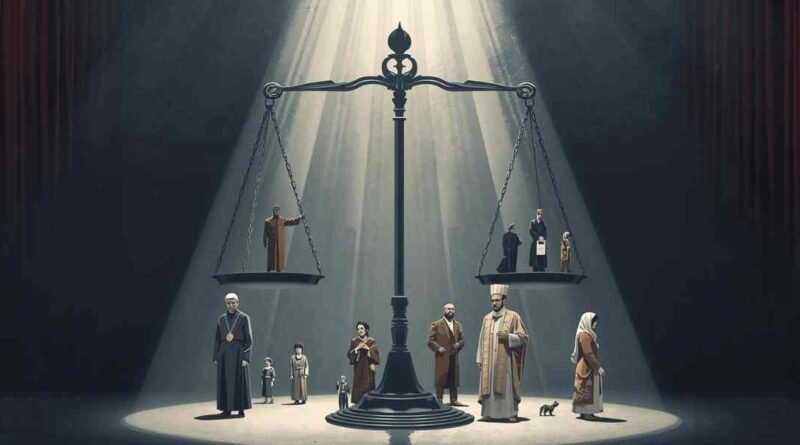
What Is the Manipulative Hypocritical Illusion of Religious Freedom
Religious freedom sounds like a simple and positive idea. Most people understand it as the right to believe, practice, or not follow any religion without fear. But when people search what is the manipulative hypocritical illusion of religious freedom, they are usually questioning whether this freedom truly exists in practice.
I think this topic needs a careful and honest explanation. Because on paper, many societies promote religious freedom. But in reality, things can look very different depending on power, politics, culture, and social pressure.
Let’s break it down in a clear and human way.
Understanding Religious Freedom in Theory
At its core, religious freedom means:
- You can follow any religion
- You can change your beliefs
- You can practice your faith openly
- You can also choose not to believe
This idea is often written into laws, constitutions, and international agreements. It is seen as a basic human right.
In theory, it promotes:
- Tolerance
- Equality
- Peaceful coexistence
But theory and reality are not always the same.
What Is the Manipulative Hypocritical Illusion of Religious Freedom?
The phrase what is the manipulative hypocritical illusion of religious freedom points to a deeper concern.
It suggests that:
- Religious freedom may exist in words, not in action
- Governments or societies may claim fairness but act differently
- Some groups may enjoy more freedom than others
In simple words, it’s the idea that religious freedom is sometimes used as a cover or image, while real equality is missing.
This doesn’t mean religious freedom is fake everywhere. But it highlights situations where it is uneven, selective, or controlled.
Why People Call It an Illusion
Let’s look at the reasons behind this viewpoint.
1. Unequal Treatment of Religions
In many places, one religion is dominant. Even if laws say everyone is equal, in reality:
- Majority religions often get more respect
- Minority groups may face restrictions
- Social acceptance is not equal
This creates a gap between legal rights and real-life experience.
2. Social Pressure and Fear
Even if the law allows freedom, society can limit it.
For example:
- People may fear backlash for changing beliefs
- Families or communities may reject different views
- Public criticism can silence individuals
So technically, freedom exists. But emotionally and socially, it feels restricted.
3. Political Use of Religion
Religion is sometimes used for political gain.
Leaders may:
- Support one religious group to gain votes
- Create divisions to stay in power
- Use religion to control narratives
In such cases, religious freedom becomes a tool, not a principle.
4. Selective Freedom
Another reason behind the idea of what is the manipulative hypocritical illusion of religious freedom is selective enforcement.
Some actions are allowed for one group but restricted for another.
For example:
- Certain religious expressions may be accepted
- Others may be labeled as controversial or dangerous
This selective approach makes freedom feel unfair.
5. Legal Loopholes and Restrictions
Even in countries with strong laws, there are often hidden limitations.
These can include:
- Restrictions on conversion
- Limits on public worship
- Control over religious institutions
These rules may not completely remove freedom, but they shape and limit it.
The Role of Power and Influence
To understand this topic deeply, you need to look at power.
Religious freedom often depends on:
- Who holds authority
- Which groups are dominant
- What narratives are promoted
Power can quietly decide:
- Whose voice is heard
- Whose beliefs are accepted
- Whose practices are restricted
So when people ask what is the manipulative hypocritical illusion of religious freedom, they are often pointing toward this imbalance.
Real-Life Experience vs Legal Promise
There is a big difference between:
- What laws say
- What people actually experience
For example:
A country may officially allow all religions. But:
- Minority places of worship may face challenges
- Certain beliefs may be socially unacceptable
- People may self-censor to avoid conflict
This gap is where the idea of “illusion” comes from.
Cultural Influence on Religious Freedom
Culture plays a huge role.
Even without laws, culture can shape behavior:
- Traditions can pressure individuals
- Community norms can discourage change
- Social identity can be tied to religion
So even if legal freedom exists, cultural expectations may limit true choice.
Media and Public Narratives
Media also affects how religious freedom is seen.
Sometimes:
- Certain groups are portrayed positively
- Others are shown negatively
- Stories are framed to influence opinion
This shapes public perception and can create bias.
Over time, it can normalize inequality while still claiming fairness.
Is Religious Freedom Always an Illusion?
Not necessarily.
This is important to understand.
In many places:
- People do practice their faith freely
- Laws do protect individuals
- Progress is being made
So the idea of what is the manipulative hypocritical illusion of religious freedom is not a universal truth.
It’s more of a critical perspective used to question systems and push for improvement.
The Difference Between Ideal and Reality
Think of religious freedom as an ideal.
The ideal says:
- Everyone is equal
- Everyone is respected
- Everyone is free
Reality can be:
- Unequal
- Influenced by power
- Shaped by culture and politics
The gap between these two creates frustration and criticism.
Why This Discussion Matters
This topic is not just academic.
It affects real lives.
When religious freedom is limited or uneven:
- People feel unsafe
- Voices are silenced
- Trust in systems decreases
Talking about it helps:
- Raise awareness
- Encourage fairness
- Promote honest discussion
Moving Toward Genuine Religious Freedom
If the goal is to move beyond the illusion, some steps are important.
1. Equal Law Enforcement
Laws should apply the same way to everyone.
No group should get special treatment or face hidden restrictions.
2. Social Awareness
People need to understand and respect different beliefs.
Education and open dialogue can reduce bias.
3. Protecting Minority Rights
True freedom is tested by how minorities are treated.
Strong protection systems can help balance power.
4. Reducing Political Manipulation
Religion should not be used as a tool for power.
Clear boundaries between politics and belief systems can help.
5. Encouraging Open Expression
People should feel safe to:
- Speak
- Question
- Change beliefs
Without fear of punishment or rejection.
A Balanced Perspective
It’s easy to become extreme when discussing this topic.
Some people may say:
- Religious freedom is perfect
Others may say:
- It’s completely fake
The truth usually lies in between.
Understanding what is the manipulative hypocritical illusion of religious freedom helps you see both sides:
- The promise
- The reality
And most importantly, the gap that still needs work.
Conclusion
So, what is the manipulative hypocritical illusion of religious freedom?
It’s the idea that while religious freedom is widely promoted, it is not always fully practiced. In some cases, it becomes selective, influenced by power, shaped by culture, or used for political advantage.
But this doesn’t mean the concept itself is wrong.
It means the implementation is imperfect.
I think understanding this difference is important, you know. Because real progress starts when people question things honestly, without denying reality or ignoring the positive side.
Religious freedom is not just a law. It’s something that needs continuous effort, fairness, and awareness to become truly real for everyone.
FAQs
What does the illusion of religious freedom mean in simple words?
The illusion of religious freedom means that people are told they have full freedom to follow any religion, but in reality, there may be limits. These limits can come from society, politics, or unequal treatment. So while freedom exists on paper, it may not feel real in everyday life.
Why do some people believe religious freedom is hypocritical?
Some people feel it is hypocritical because governments or societies claim equality but treat religions differently. One group may enjoy more freedom, while others face restrictions. This creates a mismatch between what is promised and what actually happens.
Can religious freedom exist without social pressure?
It’s very difficult. Even if laws allow full freedom, social pressure can still influence choices. People may fear judgment, rejection, or conflict. True freedom requires both legal protection and social acceptance.
Is religious freedom better in modern times?
In many ways, yes. Laws and awareness have improved in many parts of the world. However, challenges still exist. Some groups still face discrimination or limitations, which is why the topic continues to be discussed.
How does politics affect religious freedom?
Politics can influence religious freedom by favoring certain groups or using religion to gain support. Leaders may create divisions or control narratives. This can reduce fairness and turn freedom into a strategic tool rather than a genuine right.
What is the difference between religious tolerance and religious freedom?
Religious tolerance means accepting that others have different beliefs. Religious freedom goes further by allowing people to practice those beliefs openly. You can have tolerance without full freedom, but true freedom requires both acceptance and equal rights.